
In this post I'll be looking at the Black 2.0 paint for reducing unwanted internal reflections in filter rings, adapters, etc. In particular I'll be looking at how black it is in near-infrared, and also seeing how IR black material and standard black 3D printed PETG appear. We'll also compare in visible and UV as well.
Video version of this post is available here: Black 2.0 Paint Tested In UV, Vis, IR for filter rings.
This is a brighter image of our test scene:
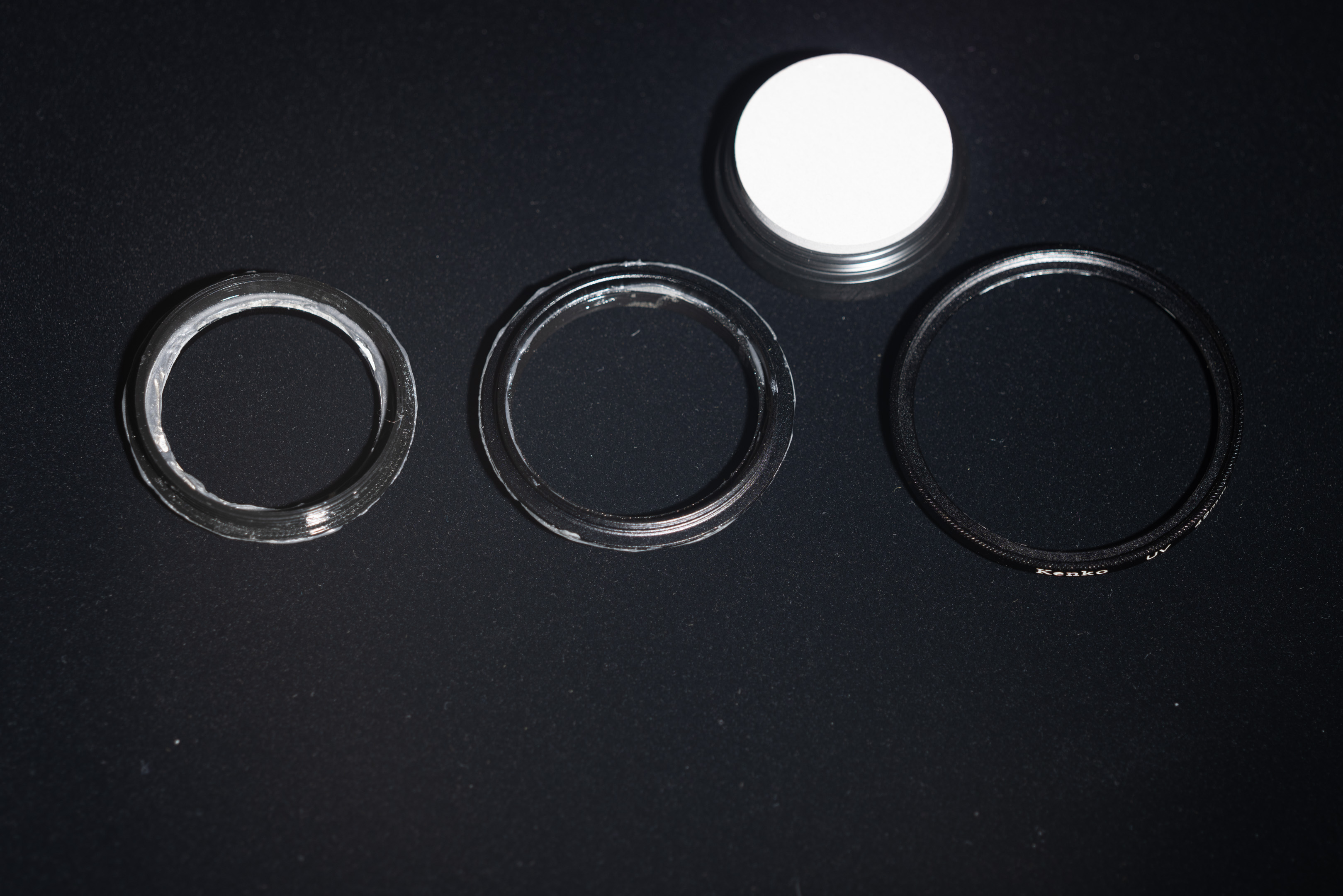
Before painting with Black 2.0
On the left we have a custom adapter with a metal filter ring on the bottom epoxied to a 3D printed PETG ring on the top. In the middle we have the same but the other way round, with the metal ring on top. On the right we have a metal filter ring.
Above the rings we have a 40% Labsphere Spectralon standard. They are all placed on the Musou IR black material. The images have all had the exposure adjusted in post to put the target at 40% brightness.
Visible light
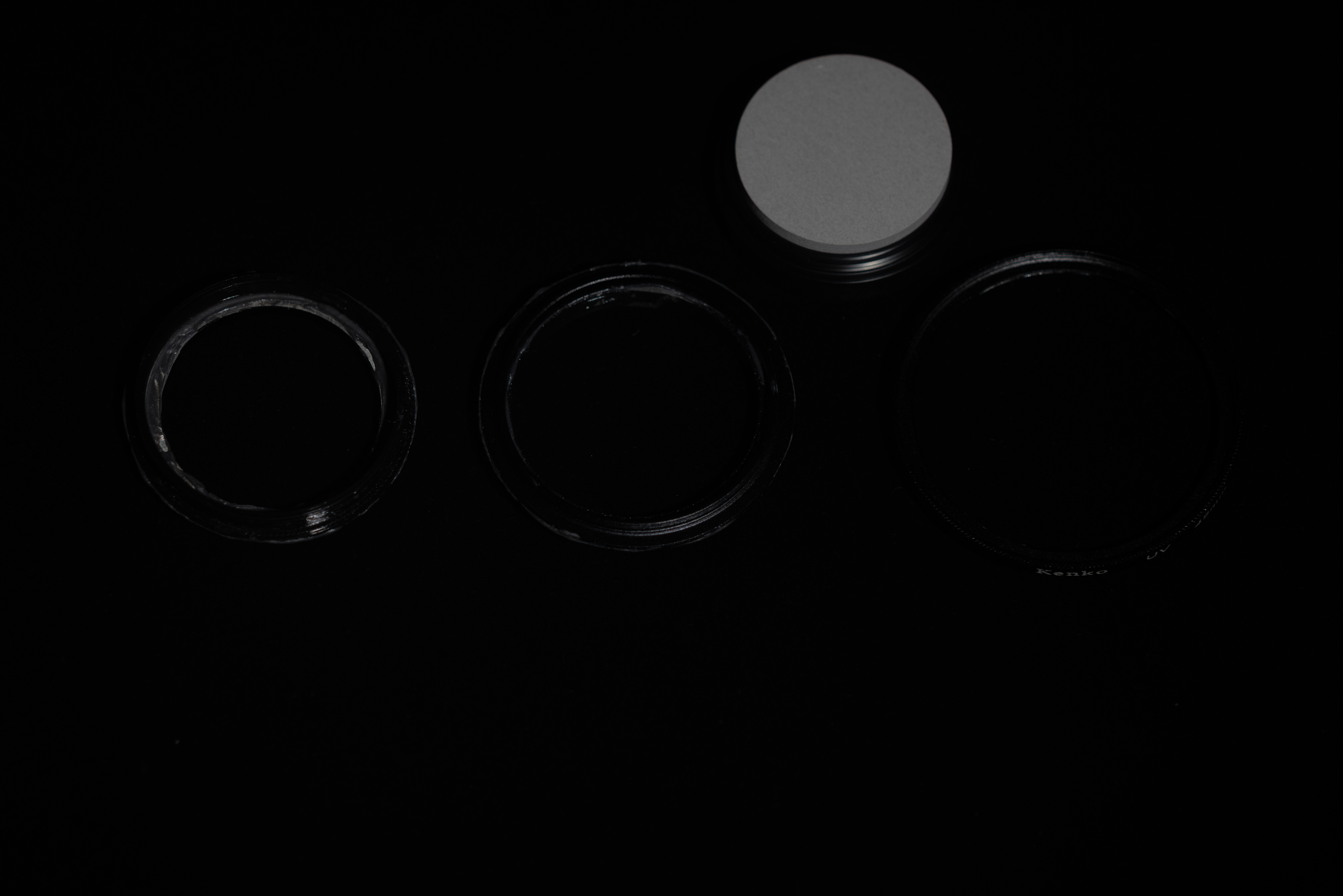
Before painting with Black 2.0
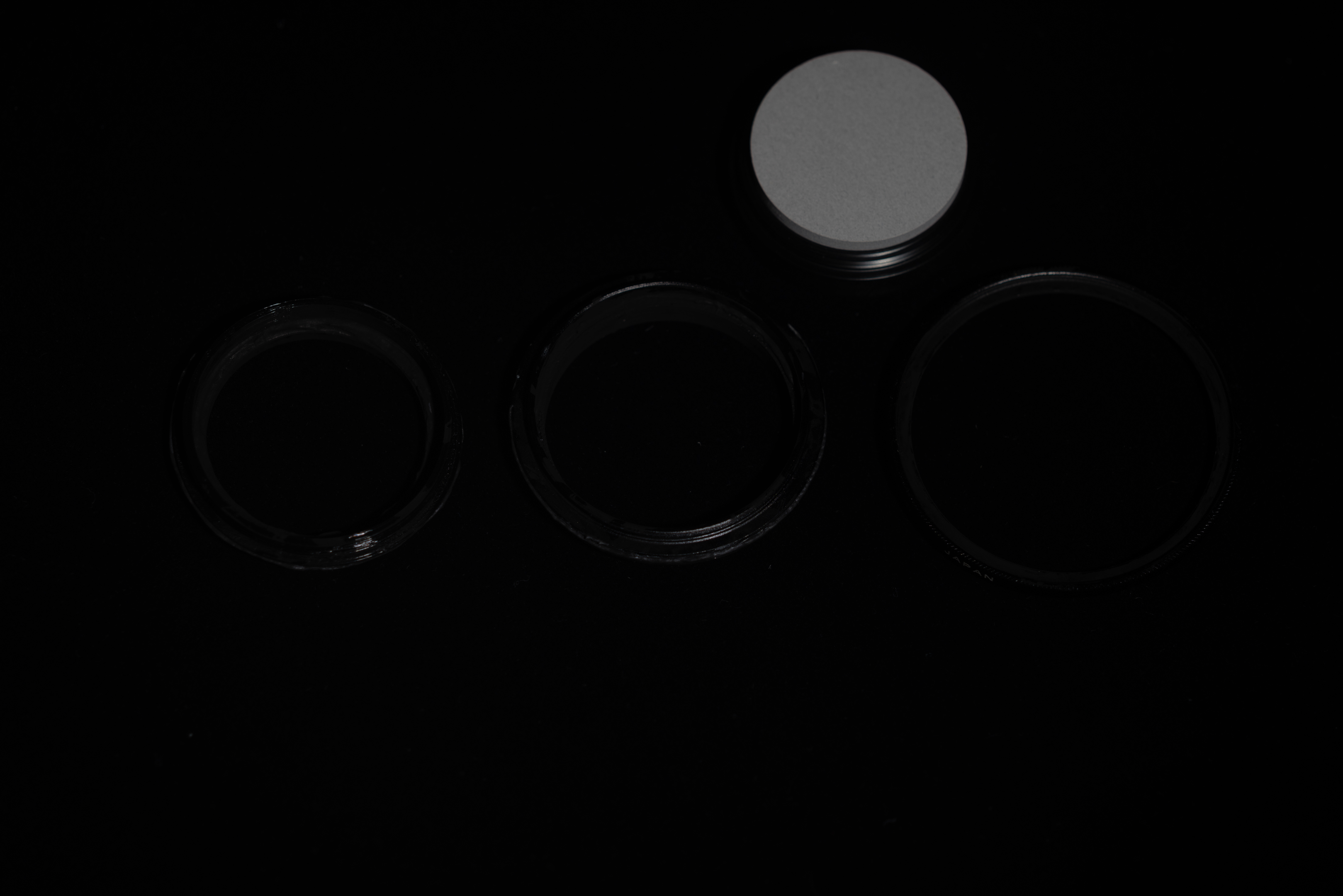
After painting with Black 2.0
Note that the outsides of the rings were not painted, other than the epoxy around the middle of the two custom adapters.
Apart from the epoxy areas that were not black to begin with, there is not much difference from before they were painted. The specular highlights on the filter threads of the filter on the right are reduced somewhat, but it is difficult to say if this is down to the paint or just the filter ring being in a different position.
Ultraviolet
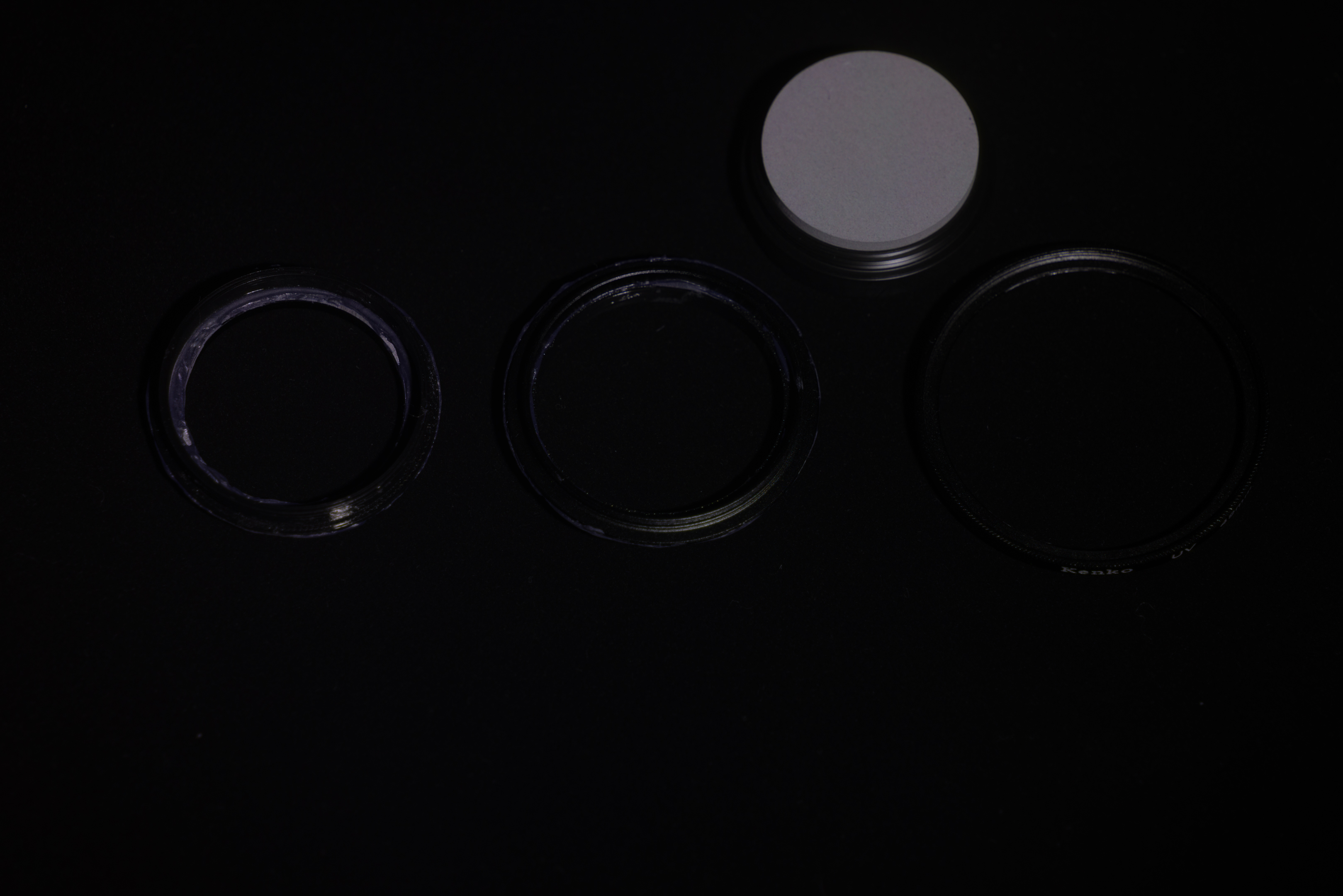
Before painting with Black 2.0
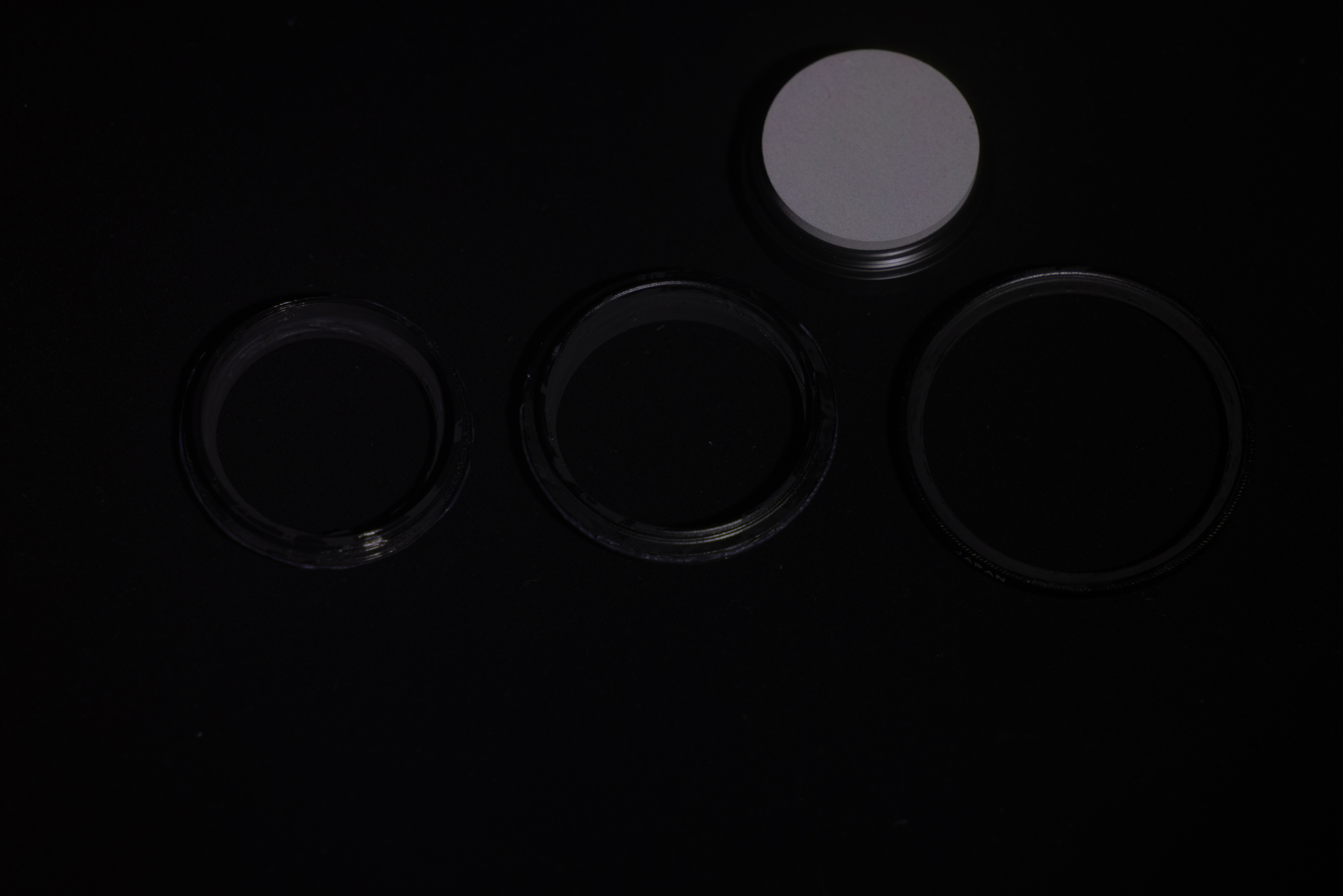
After painting with Black 2.0
Here we can see that the Black 2.0 paint is not particularly dark in UV. It is brighter than the standard black finish used on filter rings. It does give us an easy way to visualise which parts have been painted though.
The IR black material used as the background is slightly brighter in UV than Vis, however it is still decently dark.
Full spectrum
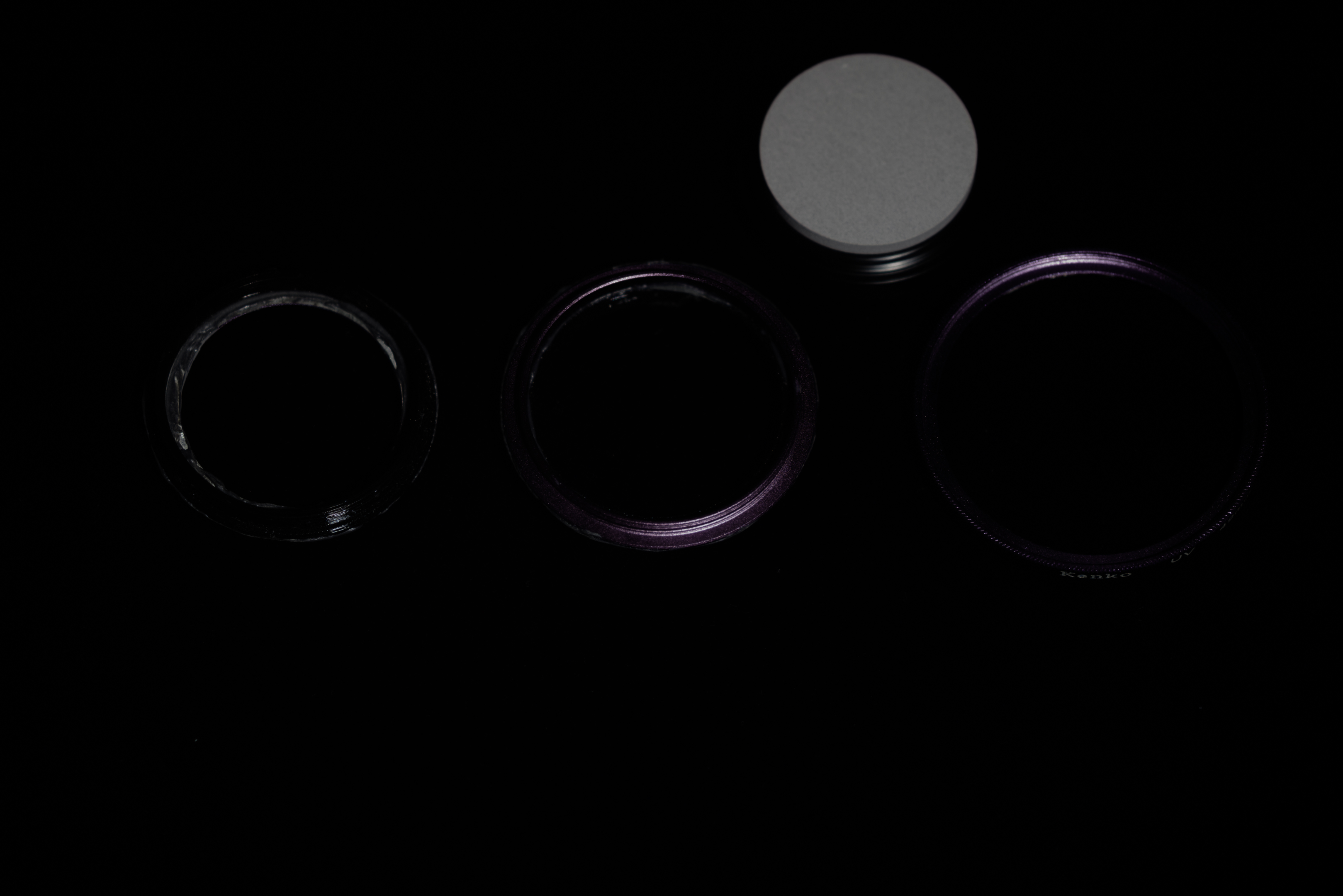
Before painting with Black 2.0
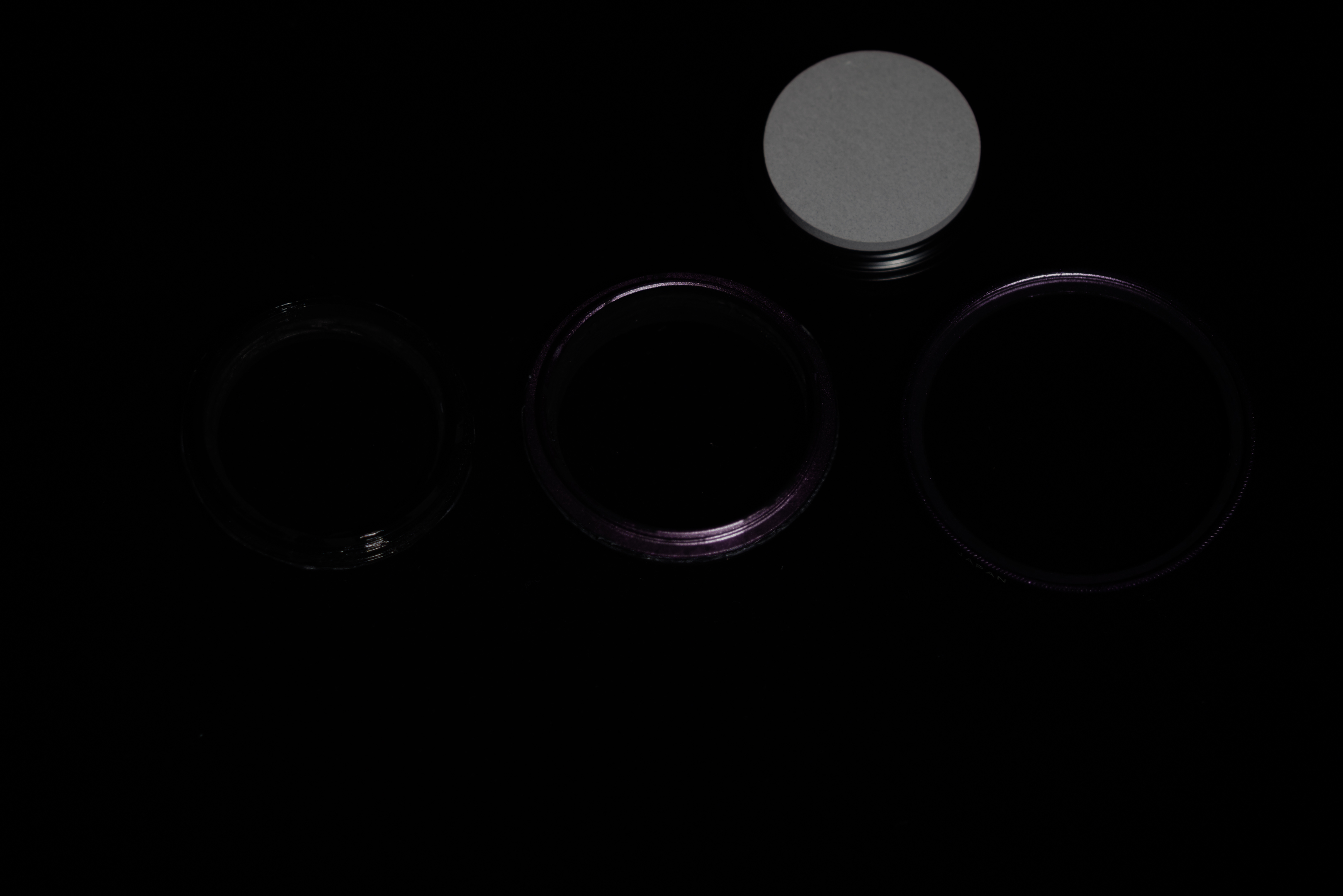
After painting with Black 2.0
On the filter ring at the right we see reduced highlights on the filter threads and the flat retaining ring is slightly darker as well.
680nm+
Now 680nm, so mainly infrared with a bit of visible red light:
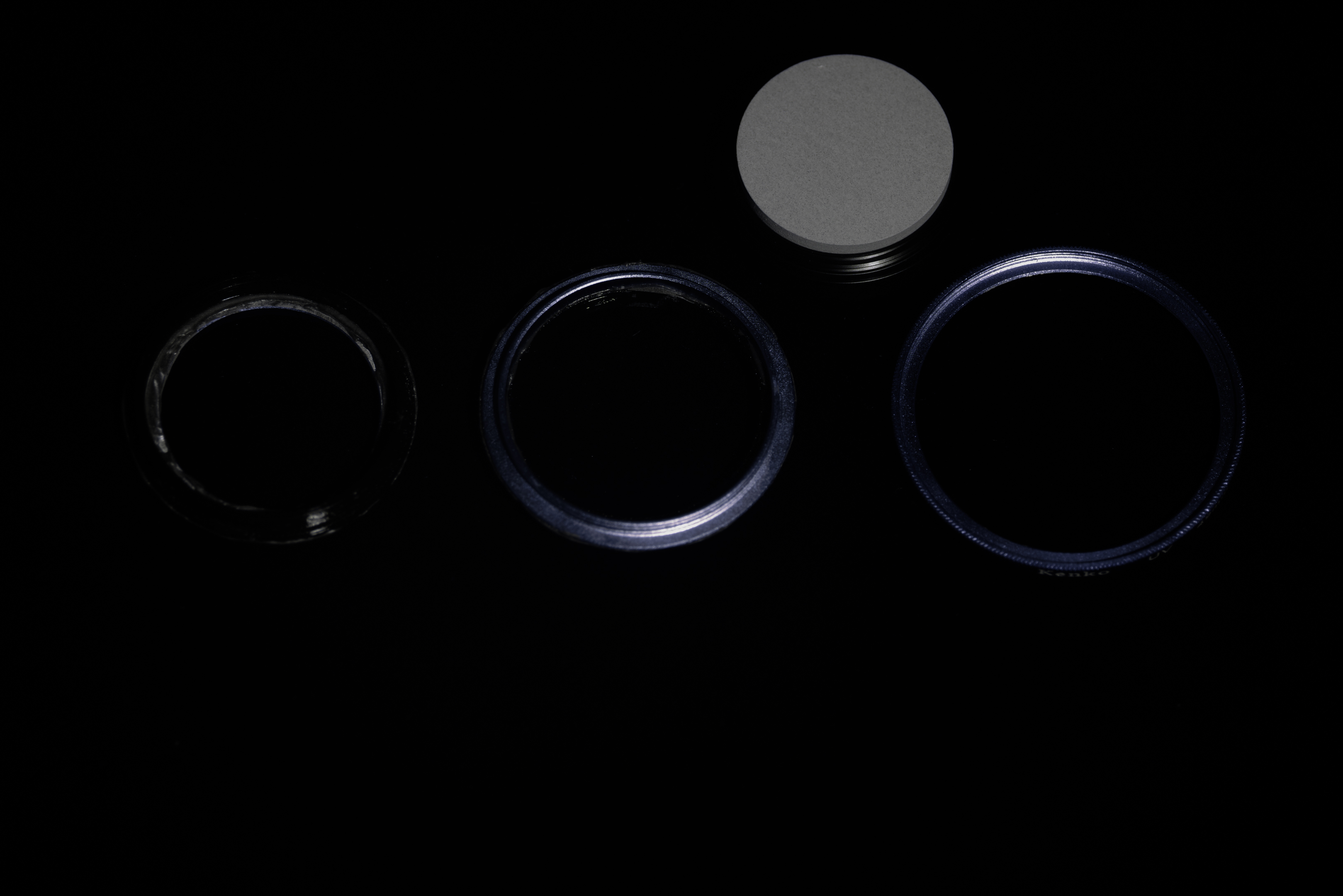
Before painting with Black 2.0
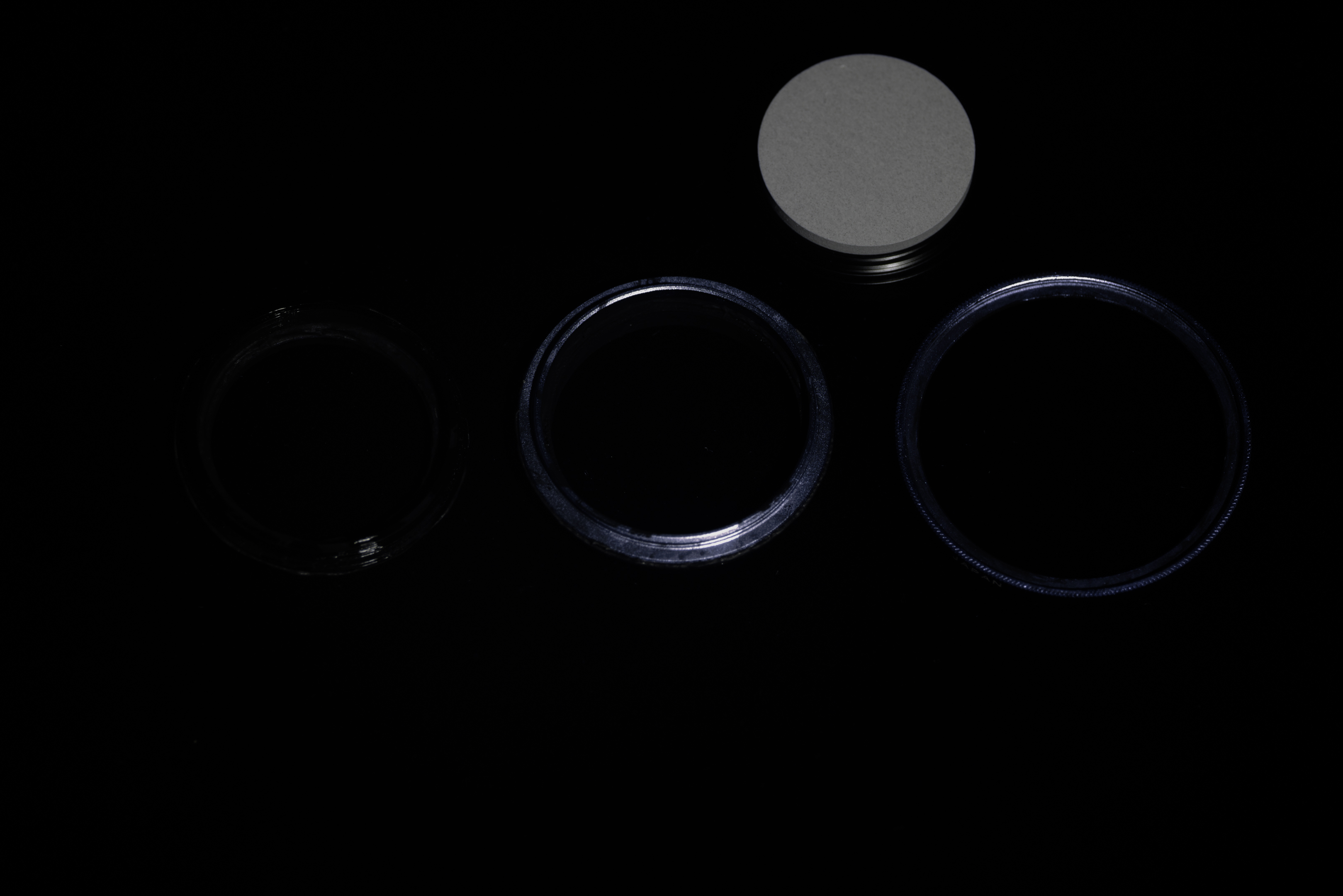
After painting with Black 2.0
Looking at the filter ring on the right again we start to see a larger difference after painting with Black 2.0.
720nm+
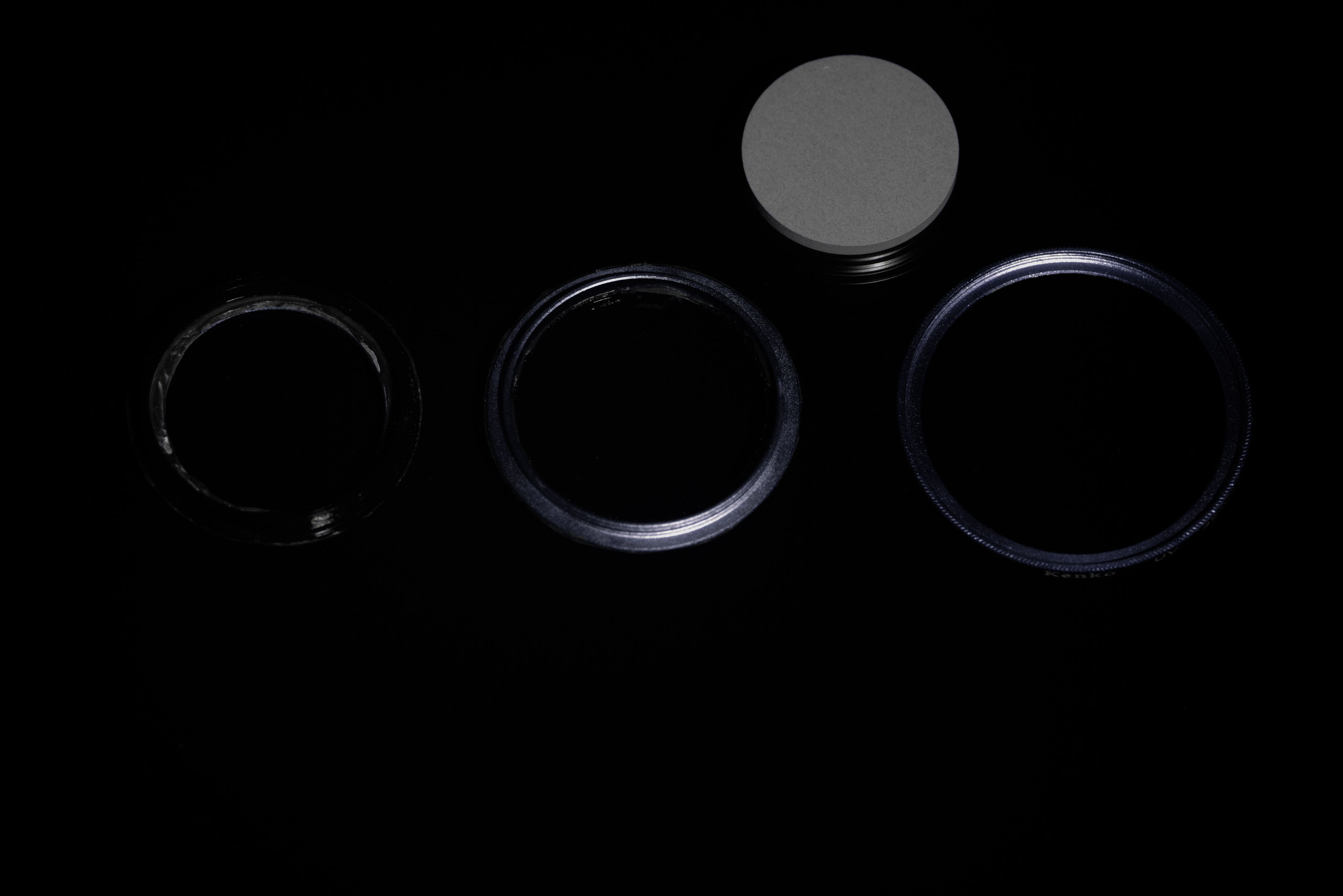
Before painting with Black 2.0
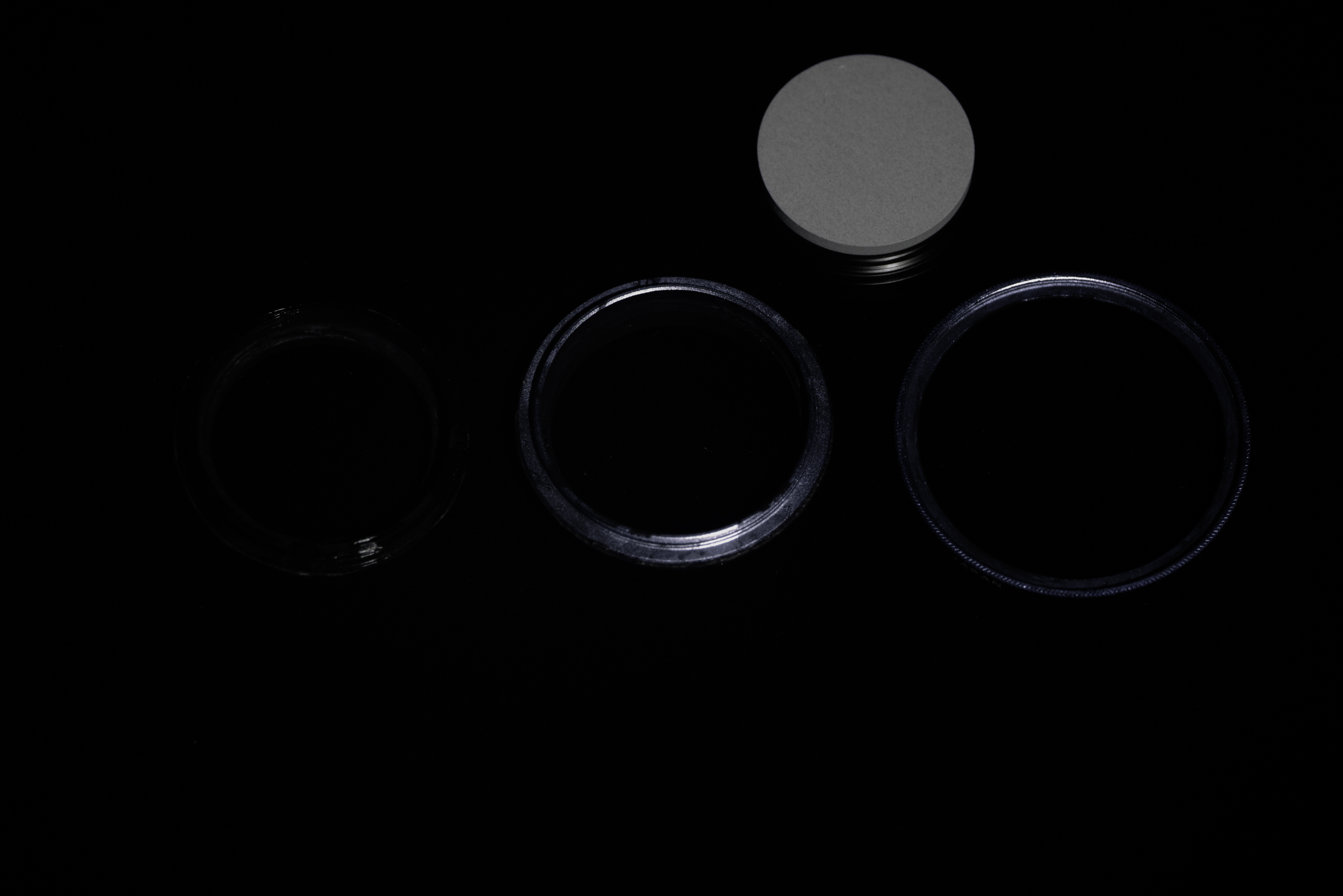
After painting with Black 2.0
At 720nm, again on the filter ring on the right we see it is slightly darker after painting with Black 2.0.
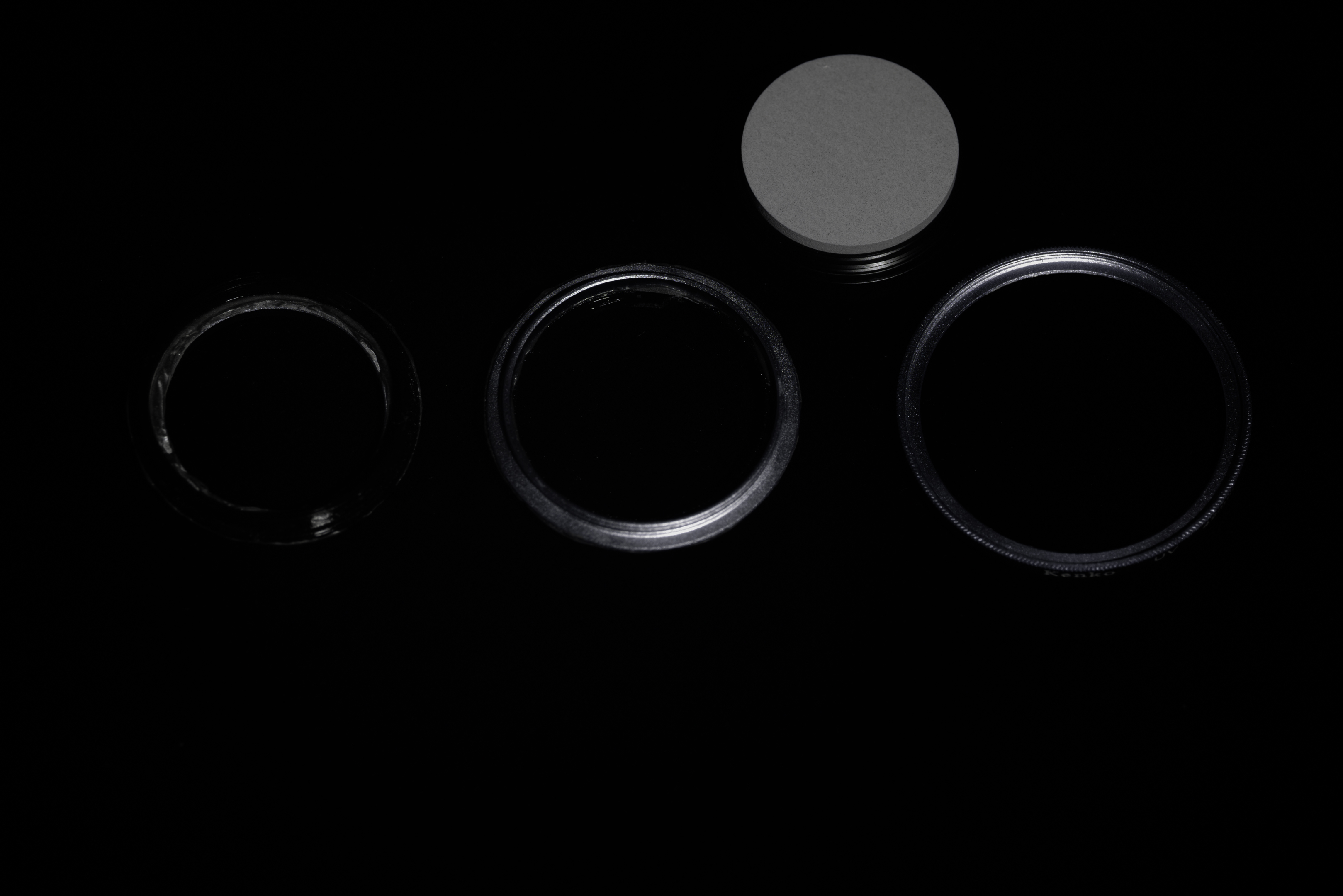
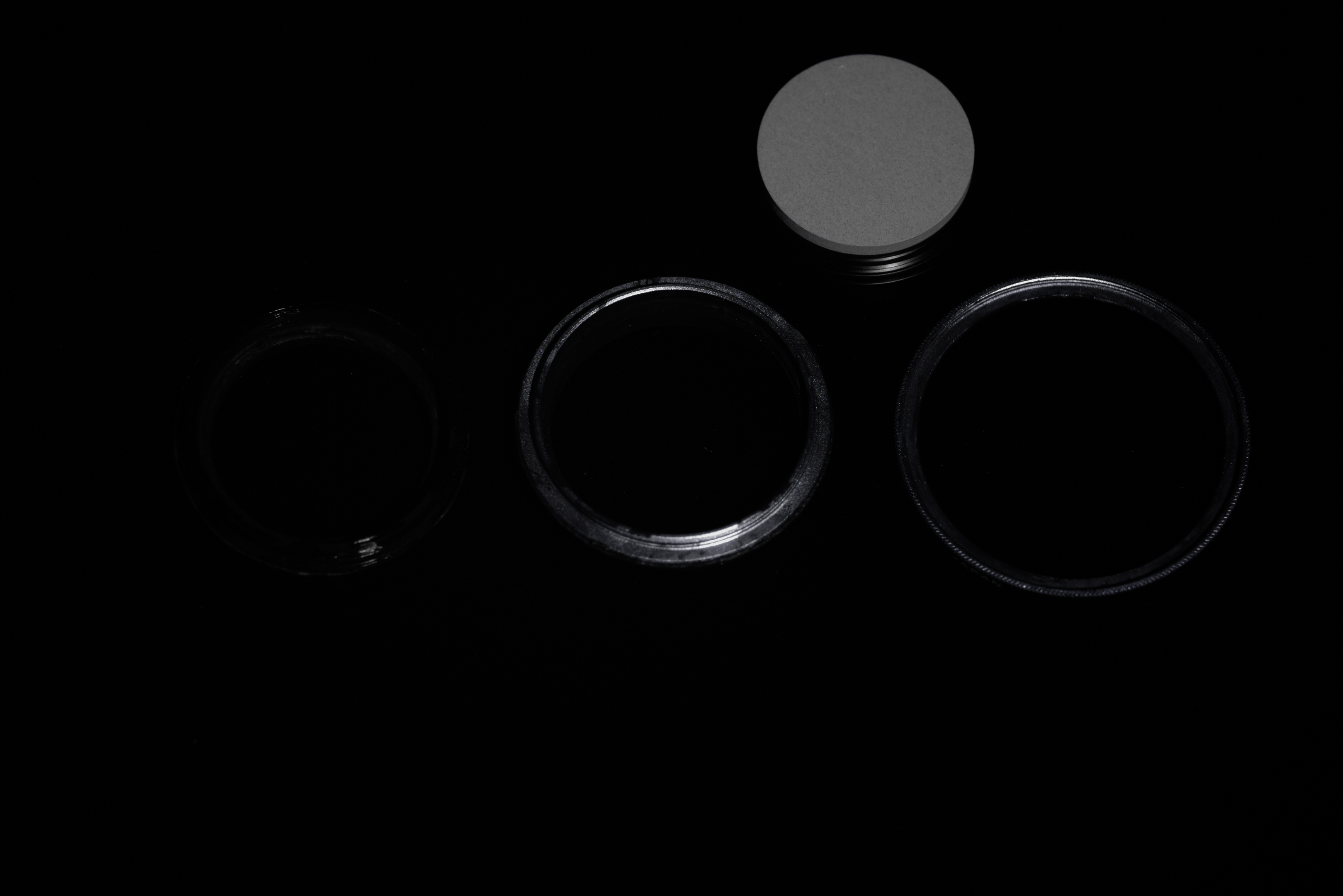
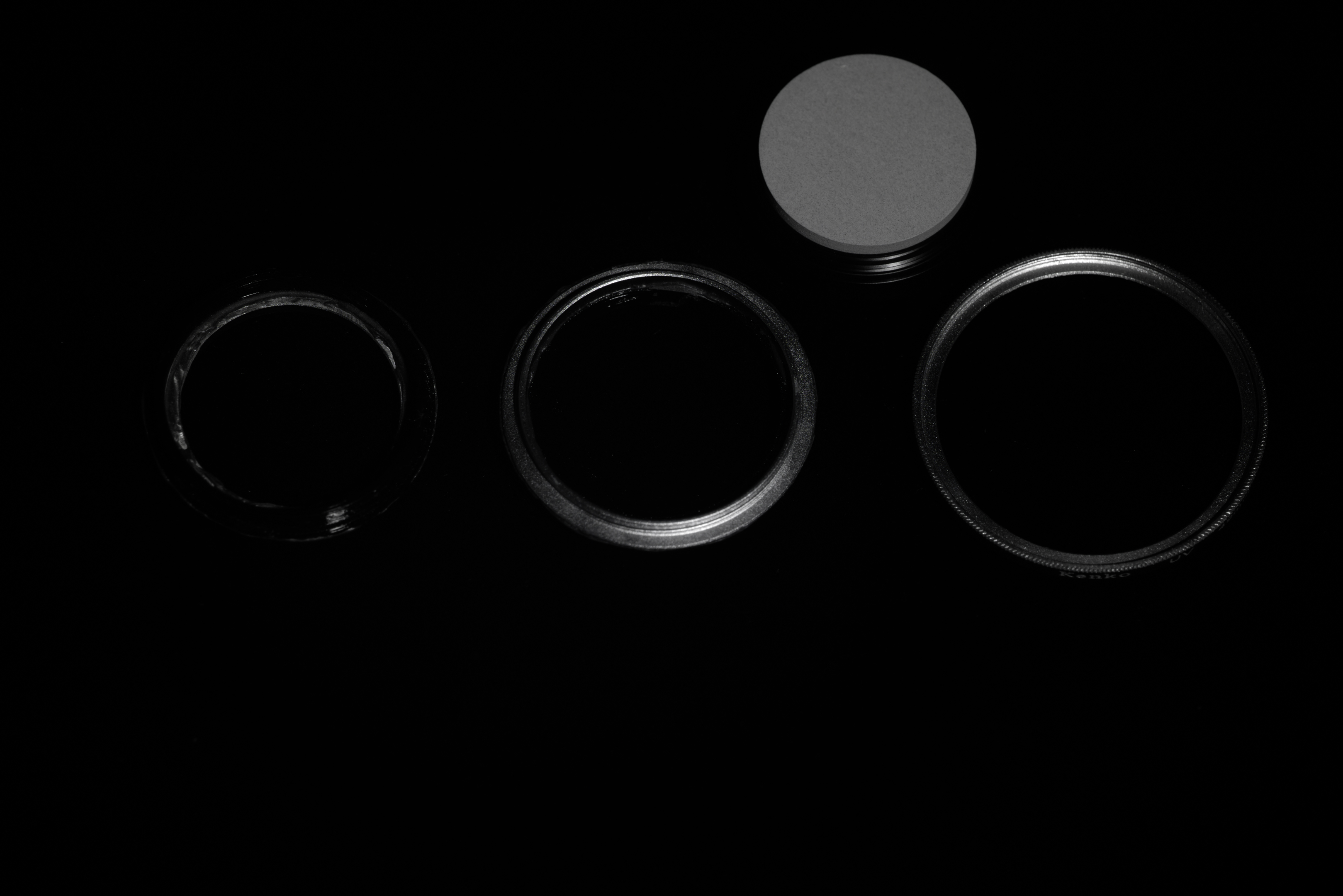
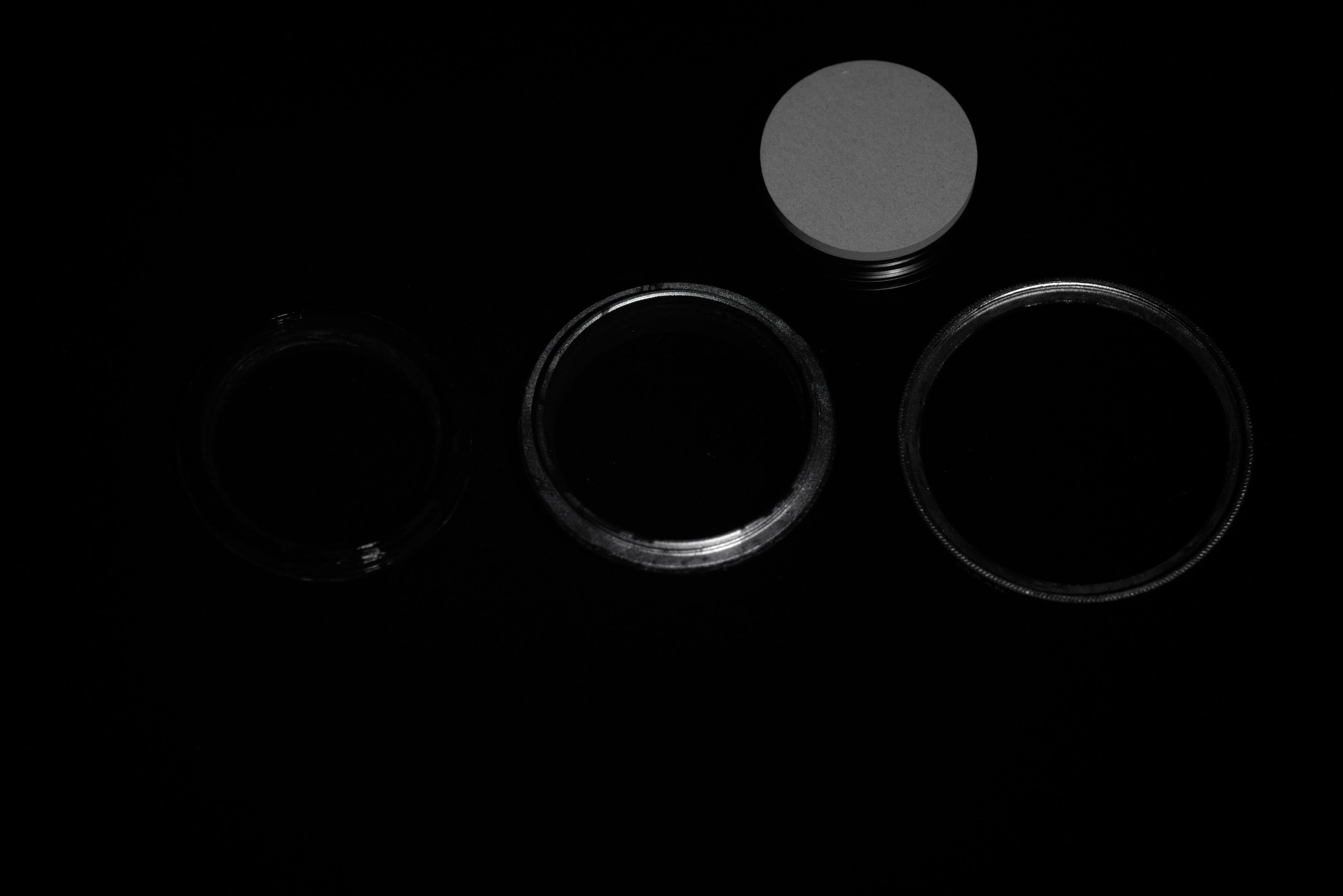
950nm+
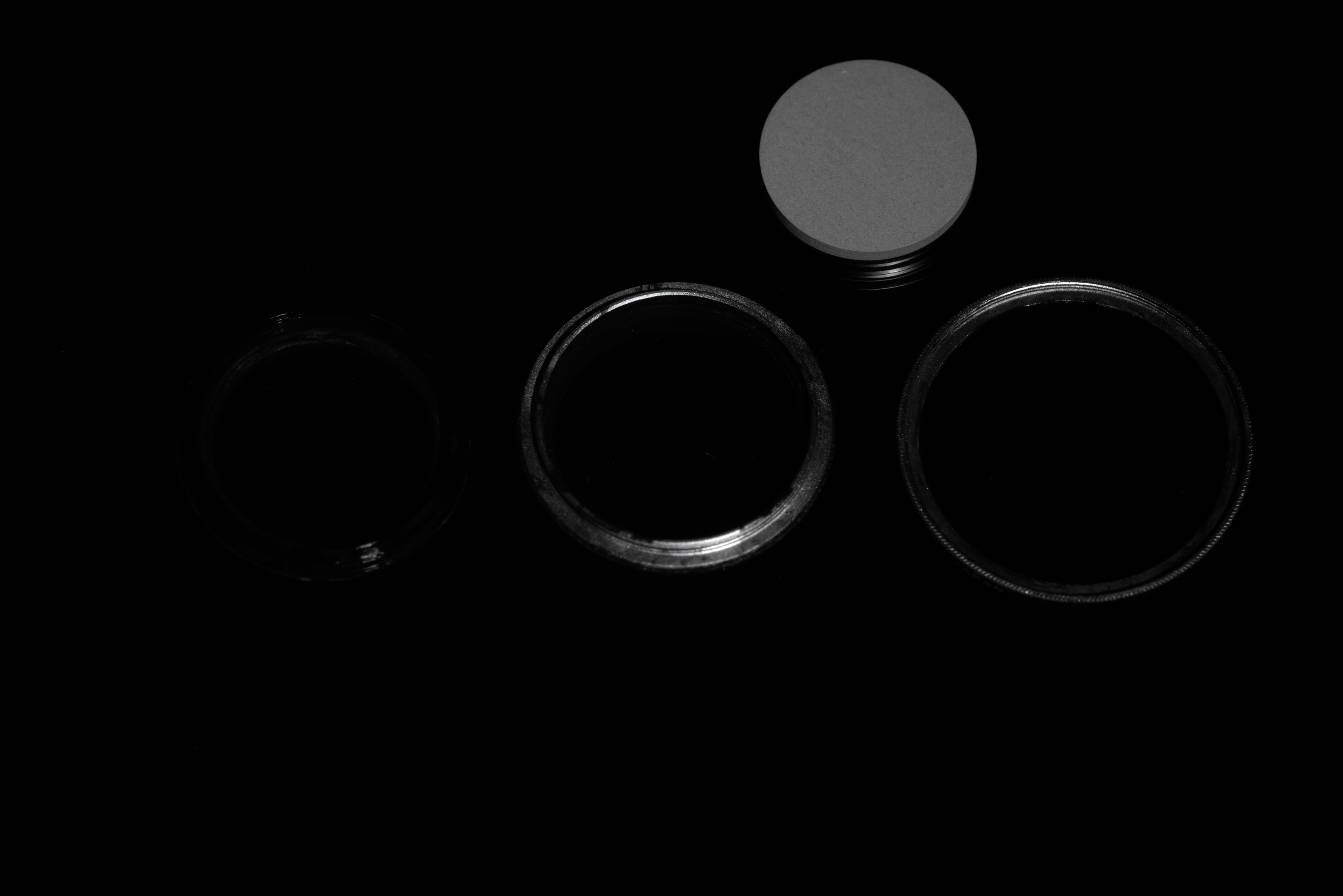
After painting with Black 2.0
Unfortunately I forgot to take a photo before painting with a 950nm filter, but here is after painting.
850nm+ PETG transparency check
Finally, here is a different test on a white background to better check the black PETG. The reason for testing on white is to check if the PETG was becoming transparent in IR. On the right here we have a a 3D printed lens hood that has been flocked with the IR black material.
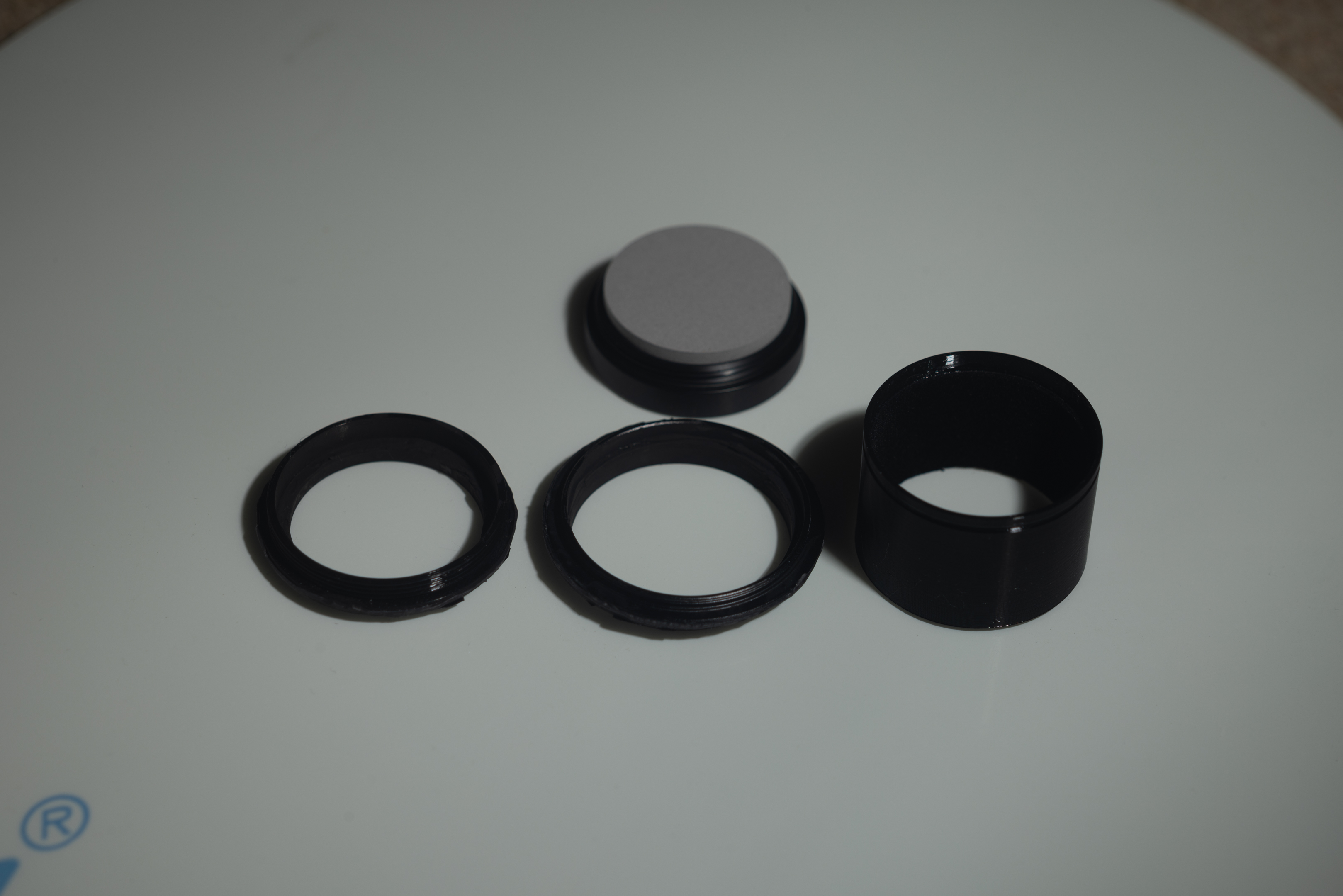
Visible light
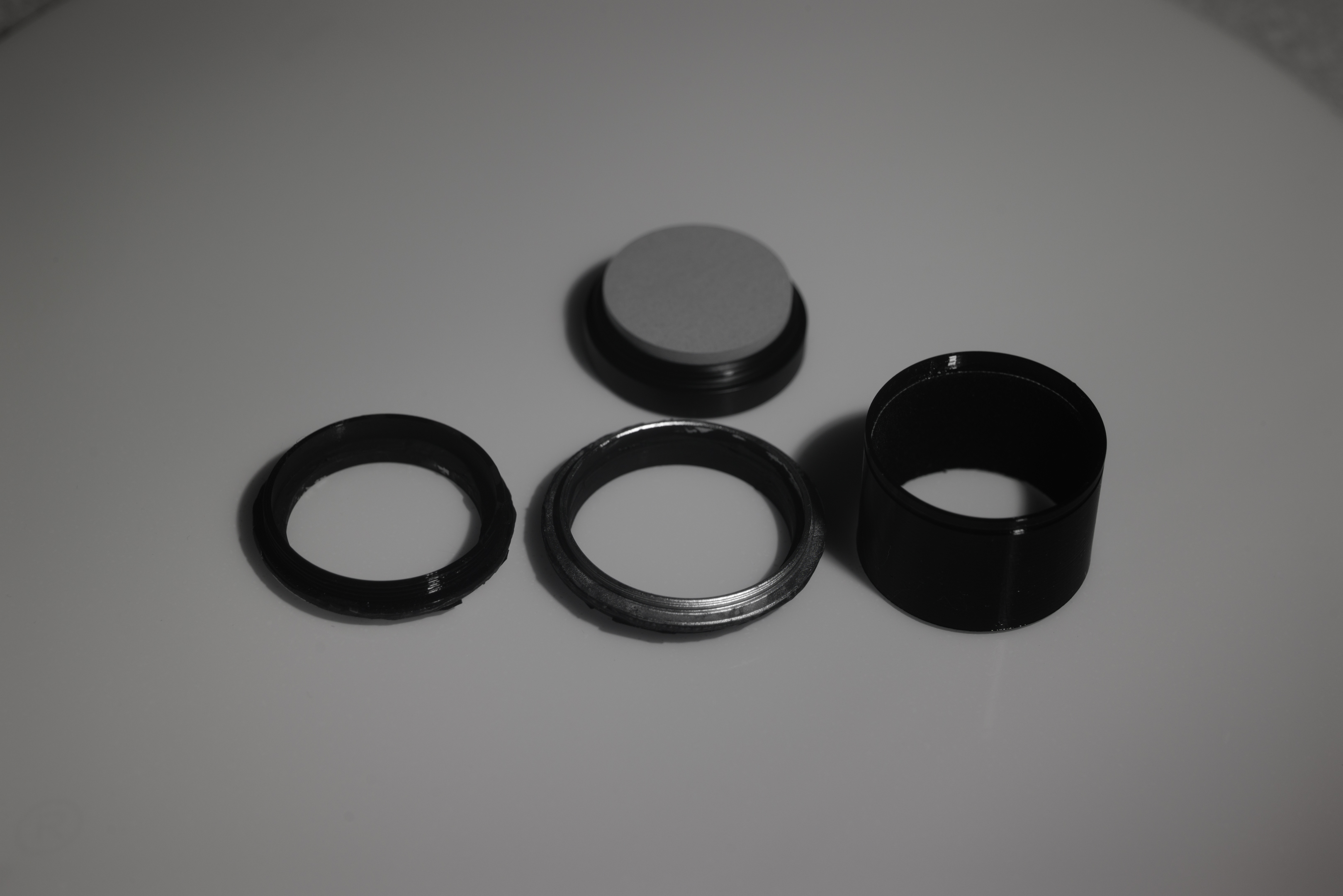
850nm+
Looking at the top of of the lens hood, where it is unflocked, we can see it doesn't really change between Visible light and infrared.
Conclusion
So what we can say from this is that the Black 2.0 paint works okay in IR. However, I wouldn't say it is a lot better than the standard paint used on filter rings etc.
In UV the Black 2.0 paint does not work so well, which is annoying because I recently used it to re-blacken the lens element edges of my 80mm EL-Nikkor lens that I use for UV.
I would not say the Black 2.0 paint rubs off easily, but it will flake off much easier than anodised aluminium.
Although you can dilute the paint with water, it seems fairly resistant to water once dried, though not as much as anodised aluminium.
The Musou IR black material works well, it is not quite as good in UV, but still pretty dark.
The 3D printed black PETG retains good darkness across the spectrum. However, I would still use the IR black flocking material on it to reduce specular reflections for things like lens hoods.
I plan to try out some more of the Musou black products, to see if they work better in UV and IR than the Black 2.0 paint. But that will likely be either late this year or early next year.

Leave a Reply